
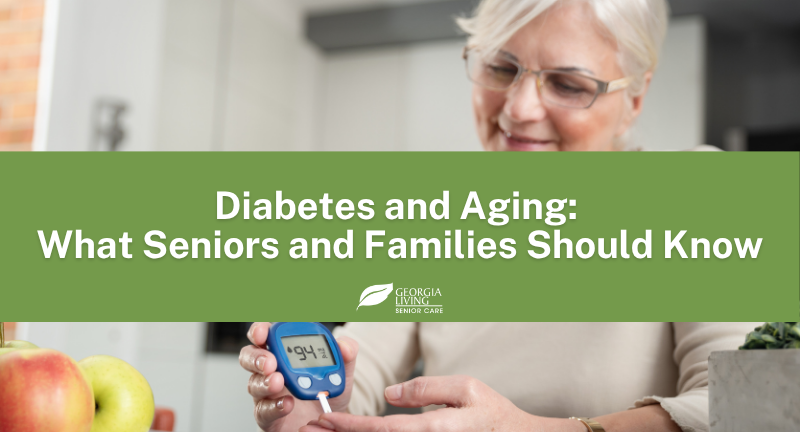
Every November, American Diabetes Month shines a light on a condition that touches nearly every family in some way. For older adults, it’s especially personal. According to the American Diabetes Association, 28.8% of Americans age 65 and older are living with diabetes. That’s close to 3 in 10 seniors.
Diabetes often develops quietly, so many people don’t know they have it. The good news? With a little knowledge, steady habits, and the right support, diabetes in seniors is very manageable. Here’s what older adults and the families who love them should know.
Why Diabetes Risk Rises With Age
Diabetes affects how the body turns food into energy. With type 2 diabetes, by far the most common form in older adults, the body doesn’t use insulin as well as it should. Sugar builds up in the bloodstream instead of fueling our cells.
As we get older, a few things can nudge that risk upward. Many of us move less than we used to. We naturally lose some muscle, and muscle helps the body use blood sugar. Other health conditions, medications, and family history can play a part, too.
The numbers are a real wake-up call. The ADA reports that more than 40 million Americans have diabetes, and about 11 million of them haven’t been diagnosed. Another 115 million adults have prediabetes, meaning their blood sugar is higher than normal but not yet in the diabetes range.
Signs to Watch For
The CDC notes that type 2 diabetes symptoms can take years to develop, and some people never notice any at all. That’s exactly why regular checkups matter. Still, it helps to know the common signs:
-
- Needing to urinate often
- Feeling extra thirsty or hungry
- Losing weight without trying
- Feeling tired or worn down
- Feeling irritable or moody
- Blurry vision
- Cuts or sores that are slow to heal
- Numbness or tingling in the hands or feet
In older adults, these changes are easy to brush off as “just getting older.” If you notice a few of them in yourself or someone you love, bring them up with the doctor. A simple blood test can provide answers and peace of mind.
Everyday Habits That Make a Difference
Whether you’re managing diabetes or hoping to prevent it, small habits add up over time.
-
- Eat balanced meals. Fill your plate with vegetables, lean protein, and whole grains, and go easy on sugary drinks and sweets. Eating at regular times can help keep blood sugar steady.
- Keep moving. A daily walk, a chair exercise class, or gentle stretching all count. Active muscles help the body use blood sugar. Check with your doctor before starting a new routine.
- Take medications as prescribed. A weekly pill organizer or a daily phone reminder can make this easier.
- Check your feet. Diabetes can reduce feeling in the feet, so small cuts or blisters may go unnoticed. Take a quick look each day and report anything that’s slow to heal.
- Keep up with appointments. Regular A1C tests, eye exams, and dental visits help catch problems early.
- Stay connected. Managing a long-term condition is easier with support. Friends, family, and a caring community help keep spirits up and routines on track.
How Families Can Help
If someone you love has diabetes, your support matters more than you might think. Learn about the condition together, or offer to join them at a doctor’s visit with a list of questions. Cook a diabetes-friendly meal side by side, or take a walk together after dinner. Above all, offer encouragement rather than criticism. Nobody manages blood sugar perfectly, and kindness goes a long way.
Curious about your own risk? The American Diabetes Association offers a free, 60-second type 2 diabetes risk test online. It’s a great conversation starter to bring to your next checkup.
Living Well With Diabetes at a Georgia Living Senior Care community
We believe a diabetes diagnosis shouldn’t keep anyone from living a full, joyful life. As a senior living community, we make healthy routines feel natural, not like a chore. Residents enjoy nutritious, thoughtfully prepared meals, daily chances to stay active, and a caring team that gets to know each person. Just as important, they’re surrounded by friends and neighbors who make every day brighter.
Have questions about how we support residents’ health and wellness? We’d love to talk. Contact us or schedule a visit to see our community for yourself.
Sources
-
- Statistics About Diabetes, American Diabetes Association (based on CDC National Diabetes Statistics Report, 2023 data)
- Symptoms of Diabetes, Centers for Disease Control and Prevention
- Type 2 Diabetes Risk Test, American Diabetes Association